
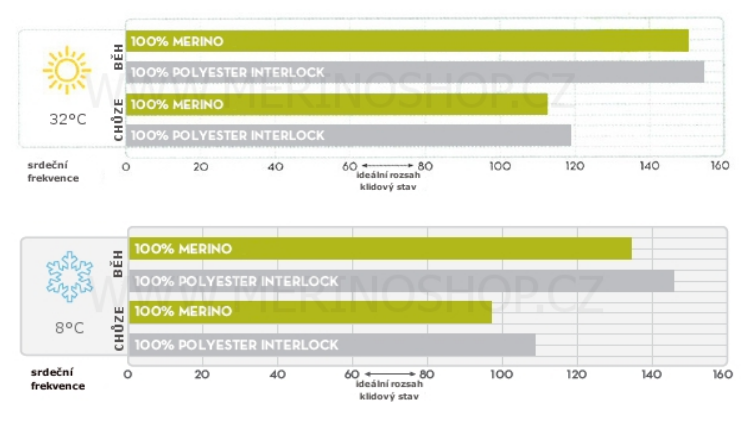
Tested in the activity: running and walking.
Conclusion: when you wear wool clothing, your heart doesn't have to work as hard to maintain your core body temperature during activities.
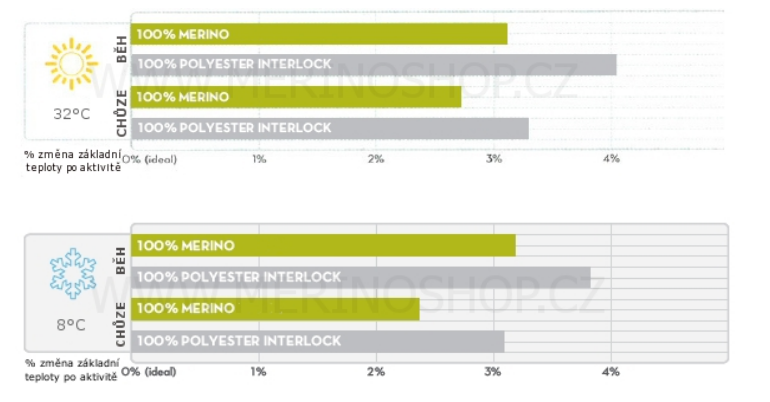
Tested in the activity: running and walking.
Conclusion: Merino wool clothing helps maintain core body temperature longer in summer and winter.
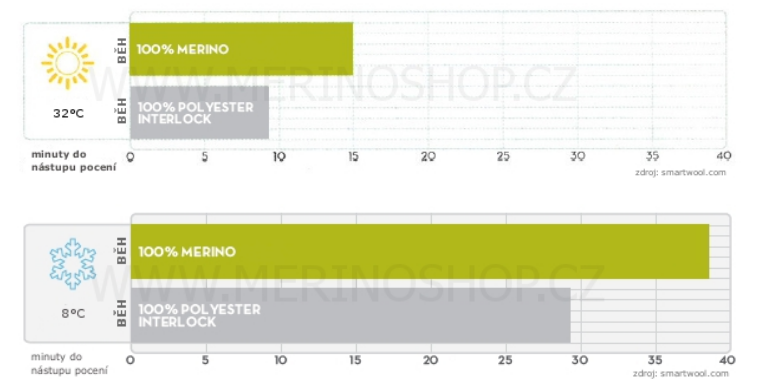
Tested in activity: running
Conclusion: Merino wool clothing starts working quite naturally with your body's heating and cooling system, delaying the onset of sweating.
No synthetics? Never?
No, it can't work and besides, that's not really the point...
We consider it only logical to use natural products and materials to the maximum extent possible, which will ensure the renewability of resources and minimize the negative impact on the environment and our health, while guaranteeing much better performance properties compared to synthetic materials.
Merino wool works without the need for synthetic treatments. The extraction of the material, processing and disposal of the wool, after the end of its life cycle, is practically free of any burden on nature. Especially compared to synthetic alternatives.
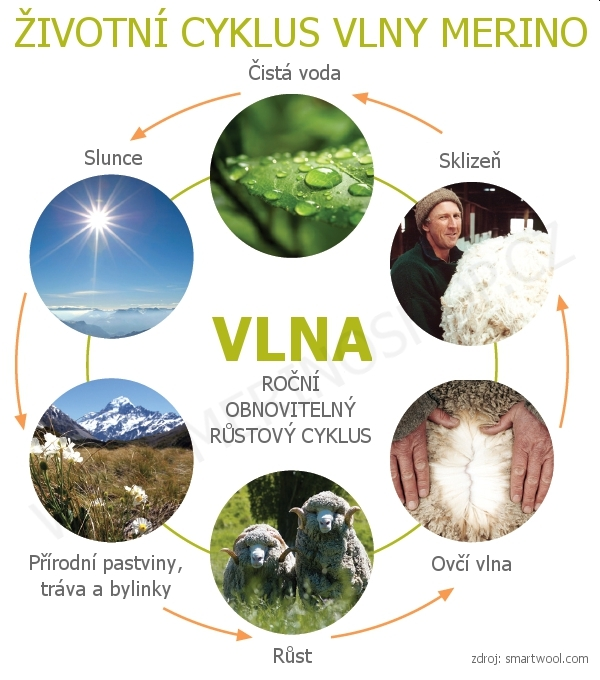
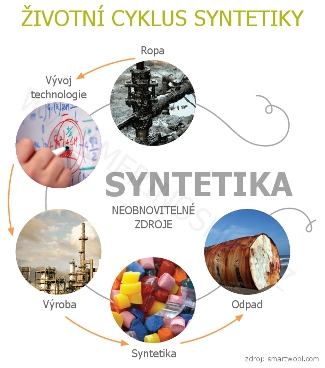
UNsustainable production...
A large proportion of the primary production of synthetic materials is produced in areas and regions where sustainability is not addressed in its full complexity, which includes the human conditions of production in 'manufacturing plants', if we call, for example, Chinese garages, where people work in totally substandard conditions for the benefit of a totalitarian regime. It is alarming that many of the world's 'big brands' ignore this.
We support sustainable production and thus favour products made of materials that contribute not only to ECOlogical sustainability but also ECOnomic, for example by being produced in our home country...
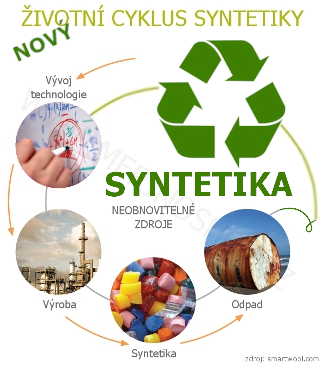
The Great Synthetic Revolution?
We are pleased to see the current revolution in synthetics production, where primary production from petroleum is beginning to be significantly replaced by secondary production from recycled waste materials. The process is not entirely "clean" but it is sustainable as it minimally generates no increment of downstream waste materials.
Clothing with synthetics made from recycled textile waste and PET bottles can also be found in our offer, because we sympathize with this approach!